When you pick up a $78 Gorjana chain bracelet or a $128 Kate Spade bangle, you are not buying gold — not in any meaningful sense. You are buying the feeling of gold: the color, the warmth, the brand name on the gift box. That is not a criticism. It is the economic model, and understanding it separates a confident shopper from one who feels vaguely cheated six months later when the finish starts to shift. The “designer premium” is the gap between what a piece costs to manufacture and what you pay at retail. For pieces in the $50–$200 range, that gap is almost always enormous — and knowing why it exists, and whether the non-metal value justifies it, is the entire game. This article runs the math on three of the most popular accessible-designer bracelet brands — Kate Spade, Kendra Scott, and Gorjana — and gives you a clear decision framework for when the premium earns its keep and when it does not.
What These Brands Actually Sell (and What the Metal Is Worth)
Let’s ground the vocabulary first, because these brands use terms loosely in their marketing copy.
Gold-plated means a base metal (usually brass or zinc alloy) with a thin electroplated layer of gold on top. The U.S. Federal Trade Commission’s Jewelry Guides (16 CFR Part 23) set no minimum thickness requirement for a piece to be called “gold-plated” — which means the layer can be as thin as the manufacturer chooses. In practice, most fashion-tier plating runs 0.5 to 1.0 microns thick. At that thickness, the actual gold content of a bracelet is measured in fractions of a cent.
Gold-filled is a different and superior construction: a mechanical bonding process that pressure-laminates a layer of karat gold (usually 14k) onto a brass core. The FTC’s Jewelry Guides require that layer to constitute at least 1/20th (5%) of the piece’s total weight by mass. A gold-filled bracelet has meaningfully more gold than a plated one — but still far less than solid gold.
Vermeil (pronounced “ver-MAY”) is gold plating over sterling silver, with the FTC’s Jewelry Guides requiring at least 2.5 microns of gold at no less than 10k purity. It is the premium tier of the plated world.
The GIA (Gemological Institute of America), in its educational materials on gold-filled versus gold-plated construction, explains that the bonded layer in gold-filled pieces resists abrasion far more effectively than electroplated surfaces precisely because it is mechanically attached rather than deposited. That distinction matters enormously for everyday wearers.
Now apply that vocabulary to the three brands:
- Kate Spade New York bracelets are almost universally gold-plated brass or zinc alloy. The brand operates in fashion jewelry, not fine jewelry — its value proposition is lifestyle branding and gift-readiness, not metal content.
- Kendra Scott uses a proprietary gold-over-brass plating for most of its gold-finish pieces. Some newer collection pieces are marketed as gold vermeil, meaning plating over sterling silver. Editors at Who What Wear, in their 2025 coverage of accessible gold bracelets, noted that the brand’s product descriptions can be inconsistent about distinguishing these two constructions — a detail worth checking before purchase.
- Gorjana occupies a slightly more transparent position. Most of its pieces are gold-plated brass, though the brand specifies 18k gold plating on several core styles and has expanded a 14k gold-filled line. Refinery29, in its 2024 feature on accessible fine jewelry, noted Gorjana as a brand that communicates construction tier more clearly than most competitors in its price range — a meaningful point of differentiation.
The Manufacturing Cost Math
Here is the uncomfortable arithmetic. For a gold-plated brass bracelet retailing at $78–$150:
- Raw brass material cost for a simple chain bracelet: roughly $0.40–$1.20 at manufacturing scale
- Electroplating cost (labor plus gold usage at 0.5–1 micron): approximately $0.15–$0.50 per piece
- Assembly, findings (clasps, jump rings), and quality check: $1.50–$4.00
- Estimated total manufacturing cost (FOB factory): $3–$8 per unit
- Landed cost with freight, duties, and tariffs: $6–$15
Against a $78 retail price, that leaves $63–$72 to be distributed across wholesale margin, retailer markup (typically 2–2.5x keystone), packaging, marketing, and brand equity. Jewelers of America, in its Gold Jewelry Buying Guide, notes that for fashion-tier plated jewelry, material costs typically represent under 15% of retail price — and often considerably less.
For a Gorjana gold-filled piece retailing around $58–$88, the picture changes slightly: gold-filled manufacturing carries higher material costs because of the bonded gold layer, but the total raw material cost is still well under $20 for most bracelet styles. The durability argument for gold-filled is real — as the GIA’s construction materials confirm, the bonded layer resists wear-through substantially longer than electroplated surfaces — but the intrinsic metal value remains negligible relative to retail.
Where the Premium Goes — and Whether It’s Worth It
Understanding the manufacturing math is not an indictment of these brands. It is a prerequisite for asking the right question: given that almost none of this price is metal, what are you actually buying?
For each brand, the premium buys something different — and the quality of that something varies considerably.
Kate Spade: The Gift Economy
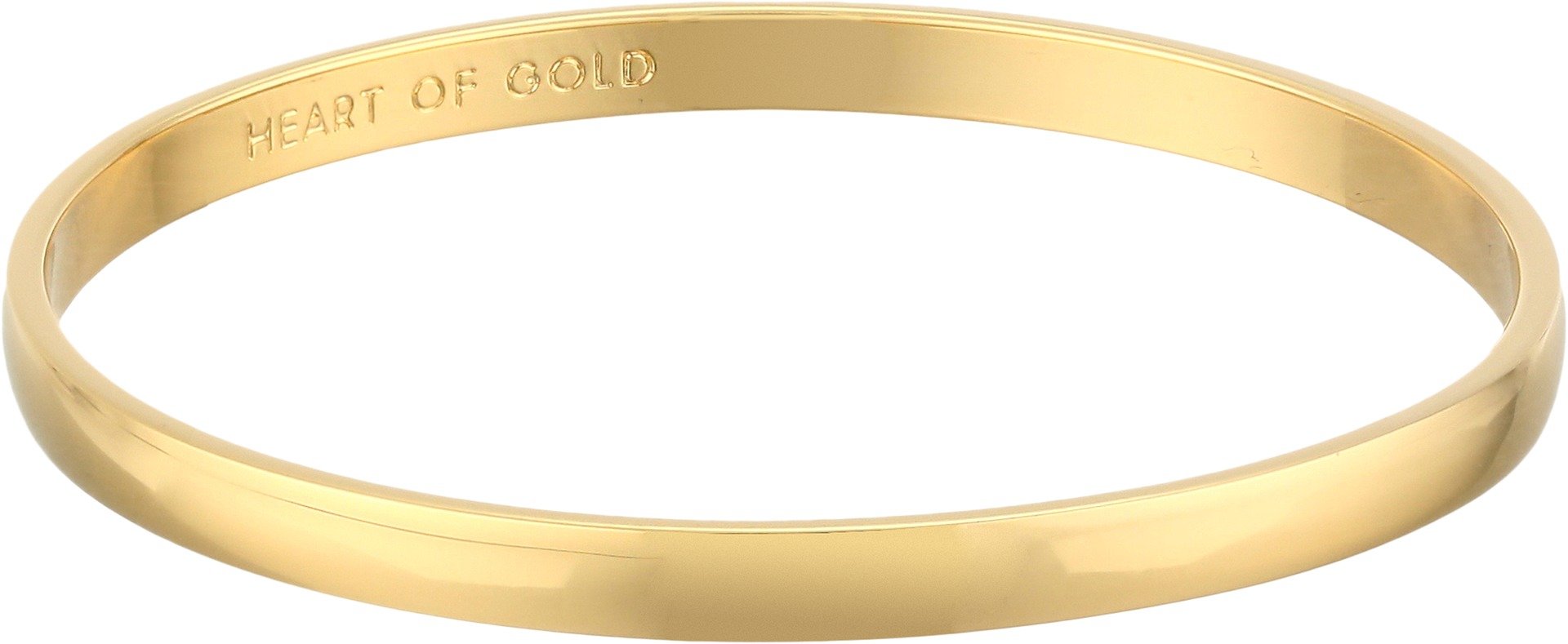
kate
$38.00
In stock on Amazon
Check price on AmazonKate Spade’s bracelet packaging — the signature spade logo box, the tissue, the brand recognition — is genuinely valuable in a gift context. Brides, in its 2025 roundup of gold bracelets for wedding gifts and everyday wear, repeatedly noted that Kate Spade’s presentation justifies the price for gifting scenarios, even when the jewelry itself is fashion-grade. If the piece will be unwrapped by someone who values the brand association, that recognition is real value.
If you are buying for yourself as an everyday wear piece, however, you are paying a steep brand tax for construction that owners consistently report shows wear within 12–18 months of regular use. Kate Spade bracelets are best understood as consumable gifts with excellent packaging, not as wardrobe investments.
Best for: Gift-giving occasions where brand recognition and presentation matter. Not ideal for daily wear durability or long-term ownership.
kate
$38.00
In stock on Amazon
Check price on AmazonKendra Scott: The Customization Premium

kate
$58.00
In stock on Amazon
Check price on AmazonKendra Scott’s competitive moat is its Color Bar model — the ability to swap stones in and out of settings, customize color combinations, and personalize pieces at point of sale. That is not metal value; it is a product experience. For buyers who use that system, the premium is proportionate to what they are getting.
For buyers who want a simple gold chain with no stones, that same premium is much harder to justify, because they are paying for infrastructure they will never use. Who What Wear’s 2025 editors’ coverage of accessible gold bracelets noted that Kendra Scott’s simpler gold styles face stiff competition from Gorjana and other brands at similar or lower price points with comparable or superior construction. The brand earns its price when you engage with the customization system; it does not earn it when you ignore that system entirely.
Best for: Buyers who want colored stones, personalized settings, and an interactive gifting experience. Skip for plain gold chain styles where you are paying full brand premium without accessing the differentiating features.
kate
$58.00
In stock on Amazon
Check price on AmazonGorjana: Construction Transparency and Longevity

Kendra
$63.75
In stock on Amazon
Check price on AmazonOf the three brands, Gorjana most consistently uses its premium for material quality rather than packaging or customization architecture. The gold-filled pieces in particular carry a documented track record among everyday wearers. The GIA’s educational resources on gold-filled versus gold-plated construction confirm the mechanical basis for their longevity: because gold-filled uses a pressure-bonded layer rather than an electroplated surface, normal friction abrades through it far more slowly under equivalent conditions.
Refinery29’s 2024 accessible fine jewelry coverage highlighted Gorjana specifically as a brand that delivers construction transparency at a price point where most competitors obscure those details. For everyday wearers who want something that behaves like fine jewelry on a $60–$90 budget, Gorjana’s gold-filled tier delivers the clearest cost-per-wear value of the three brands reviewed here.
Best for: Daily wearers who prioritize longevity, stackers who need consistent finish over time, and buyers who want honest construction information before purchasing.
Kendra
$63.75
In stock on Amazon
Check price on AmazonThe Threshold Question: When to Stop Here and Buy Up
One thing these three brands share: none of them hold metal value. A $128 Kate Spade bracelet is worth approximately nothing in recoverable metal. A $78 Gorjana chain, even gold-filled, might contain $3–$5 of recoverable gold content. These are consumable goods, not stores of value — and that is entirely fine, provided you are buying them with that understanding.
The moment the calculus changes is when you are spending $300 or more. At that price point, solid 10k gold becomes accessible — and with solid 10k gold, you are buying a piece with intrinsic metal value that can be assessed, resized, sold, or remade by any jeweler. Jewelers of America’s Gold Jewelry Buying Guide explicitly frames the $250–$350 range as the threshold where solid karat gold becomes the more rational long-term choice over premium plated pieces from fashion brands.
If a purchase is milestone-driven — a graduation, a significant birthday, a push present — the case for spending an additional $150–$200 to cross into solid gold is strong precisely because the emotional weight of the occasion deserves a piece that will still be on a wrist twenty years from now. A $78 plated bracelet is a lovely gesture; a $280 solid 10k piece is something that lasts and retains recoverable value.
The Honest Summary
The designer premium at Kate Spade, Kendra Scott, and Gorjana is real, it is large, and for most pieces it is not metal. That does not make these brands bad choices — it makes them specific choices. Each is selling something distinct: gift presentation and brand recognition, customization experience, and construction durability, respectively. The only buyer who gets shortchanged is the one who mistakes any of these for a fine jewelry investment.
Kate Spade wins when the brand name on the box is the point. Kendra Scott wins when the Color Bar customization system is part of the purchase. Gorjana wins when you want the best actual wear performance your sub-$100 budget can buy. And when the occasion or the budget tips toward permanence, buy up — because at the $300-plus threshold, the math genuinely changes, and the piece you choose will still be worth something long after a plated surface has worn away.